
“incredibly amazing”Nusaiba ★★★★★ 2023
Paula Reed
Dental therapist

Dental therapists & dentists
Do you think you need a filling? You might have noticed a hole in your tooth, have some sensitivity or been told by another dentist that you need treatment. Whatever the reason, we'll take a proper look and explain what's going on.
Sometimes a tooth needs treatment and sometimes it doesn't. Our experts will diagnose your problem and explain your options. And if you do need a filling, you can be confident we'll do it exceptionally well.
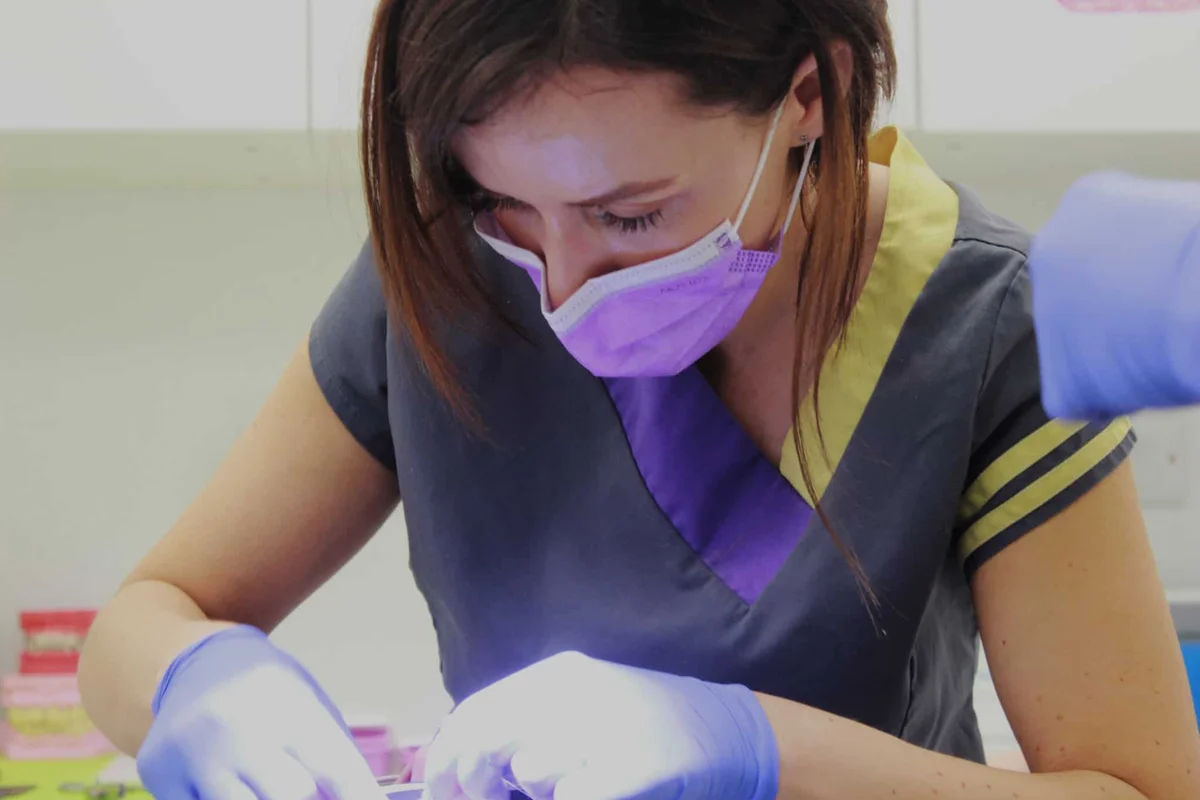
At Smileworks, we take fillings seriously. A good filling should look natural, feel comfortable and last for years. That takes careful preparation, good materials and a dentist who pays attention to the details.
Our Liverpool dentists provide white, tooth-coloured fillings to repair decay and damaged teeth. We also replace old fillings and repair broken ones.
Most fillings at Smileworks are carried out by our dental therapists.
Dental therapist

Dental therapist

Dental therapist

Dental therapist
Our dentists and dental therapists provide restorative treatment at Smileworks in Liverpool ONE.
Dr MJ Rowland-Warmann has placed thousands of fillings and emphasises careful preparation, moisture control, good bonding, accurate shaping and proper finishing.
Our dental nurses are trained to support every stage of the treatment.
We take the same care over an everyday filling as we do over more complicated dental work.
You'll meet the clinician treating your tooth, discuss their recommendations and have the opportunity to ask questions before going ahead.
“They're also good humans.”Dr MJ Rowland-Warmann
Smileworks values people who are excellent clinicians, keep learning and work well together. We want a team who care about making you comfortable, making the experience nice and getting good results.


“smooth and painless.”
“amazing! ❤️”
“fantastic”
“absolutely amazing!”
“incredibly amazing”
“chatty, hilarious and so reassuring”
“excellent dental care.”
“in safe hands”
“at ease straight away.”
“fantastic”
“clearly explained”
“dignity and respect”
“so welcoming and friendly.”
“extremely patient”
“10/10 service.”
“incredibly delightful”
“professional and friendly”
“in no way pressured”
“I couldn't be happier”
“absolutely over the moon”
“incredibly skilled”
“an amazing experience”
“very patient, professional and understanding.”
“excellent”
“comfort is always a priority.”
“♡”
“Always well looked after”
“super friendly”
“very kind and professional.”
“a great dental practice!”
Not every cavity needs drilling. And not every dark spot on a tooth is decay.
Sometimes we can treat very early tooth decay without a filling. Sometimes a tooth looks perfectly healthy but has decay developing beneath the surface.
We'll examine your teeth and take X-rays if they're needed. Then we'll explain what we find.
If you need a filling, we'll tell you why. If you don't, we won't recommend one.
Sometimes, yes.
Early decay that hasn't formed a physical cavity can sometimes be stopped or reversed through remineralisation. Fluoride, good cleaning and changes to your diet can help.
We may recommend monitoring the tooth rather than drilling it. In some cases, a sealant or preventive resin restoration is appropriate.
Once there's an established hole in the tooth, the lost tooth structure won't grow back. A dental filling is often needed to repair it.
The important thing is knowing which situation applies to you.
Of course.
We'll examine your teeth and explain which areas need treatment and which can be monitored.
A filling is an irreversible procedure. You should understand why it's being recommended before you agree to it.
The most important part of good restorative dentistry is deciding what treatment a tooth actually needs.
We don't want to drill healthy teeth. Once you remove natural tooth structure, you can't put it back. So before recommending a filling, we need to understand what's happening and whether treatment is necessary.
A black dot or dark spot on a tooth isn't always decay. It could be staining in a natural groove. Equally, a tooth can have decay without any pain or visible damage.
We examine the tooth carefully. We look at the surface, the condition of the enamel and whether there is an actual hole or cavity. We may take dental X-rays to see decay between teeth or beneath the surface.
We also consider your dental history and your risk of further decay.
We're trying to establish whether the tooth is healthy, whether decay is developing and whether it's likely to get worse.
Very early tooth decay doesn't always need drilling.
Enamel can lose minerals before a physical cavity forms. At this stage, improving oral hygiene, using fluoride and reducing frequent sugar exposure can sometimes stop or reverse the process.
We may recommend monitoring the tooth. That means checking it at appropriate intervals and making sure the condition isn't progressing.
Sometimes doing less is the right clinical decision.
An established cavity usually needs restoring when the tooth can no longer maintain its structure or the decay is progressing.
The aim is to remove or manage the damaged tissue, stop the problem getting worse and restore the tooth so you can use it normally.
We consider the size and position of the cavity, the condition of the remaining tooth and how much healthy structure we can preserve.
A small cavity may be straightforward. Deep decay requires more judgement.
When decay gets close to the nerve, we need to balance removing diseased tissue with protecting the living tooth. In appropriate cases, careful selective removal of decay can help reduce the risk of exposing the pulp.
Sometimes the nerve is already too damaged and root canal treatment may be necessary.
We'll explain these decisions before proceeding.
A large cavity, fractured tooth or damaged old restoration may need more support than an ordinary filling can provide.
We assess how much sound tooth remains, whether its cusps are weakened, whether there's a crack and how the tooth functions when you bite.
Sometimes an onlay or crown is more appropriate.
The fact that a tooth has previously had root canal treatment is another factor we consider, but it doesn't automatically mean every tooth needs a crown.
An old filling doesn't necessarily need replacing just because it's old.
Dr MJ explains that when the margins are sound and only a small part of the filling has broken away, repairing that area may be appropriate.
We examine the remaining restoration, its edges and the tooth underneath.
If the filling is failing extensively, decay has developed around it or the remaining tooth is fractured, replacement or a more protective restoration may be necessary.
Repairing an existing filling can sometimes preserve more healthy tooth than removing the entire restoration.
You should understand why we're recommending treatment.
We'll explain which teeth need attention, which can be monitored and what your options are.
You're welcome to ask questions or seek a second opinion.
Our job is to help you make a good decision about your teeth.
White fillings repair teeth affected by decay, wear or damage. They're also a good way to replace old silver fillings when replacement is appropriate.
We use tooth-coloured composite resin. Your dentist bonds it to the tooth, shapes it and polishes it.
Modern composite fillings are strong, natural-looking and suitable for many front and back teeth.
They can repair cavities, restore a broken corner, rebuild a worn surface or replace part of a tooth that's been lost.
And because the material bonds to the tooth, we can often preserve more healthy tooth structure than would be needed for some traditional restorations.
A tooth filling replaces missing or damaged tooth structure.
We remove or manage the decay, prepare the tooth and restore its original shape with a suitable filling material.
The aim is straightforward. Stop the problem, restore the tooth and make it comfortable to use again.
Traditional silver fillings are made from dental amalgam. They've been used successfully for decades and many are still functioning perfectly well.
White composite fillings are tooth-coloured. They bond to the tooth and can be shaped to reproduce its natural contours.
Composite is particularly useful when appearance matters. A carefully matched white filling can be difficult to notice.
Both materials have advantages and limitations. The right choice depends on the tooth, the size of the cavity and the forces it needs to withstand.
We'll explain your options rather than telling you one material is always better.
Dr MJ Rowland-Warmann has placed thousands of fillings.
She makes an important distinction between a filling that looks good when it's finished and one that's been made properly to last.
The difference is often in the things you can't see.
We need a clean, sound foundation for the restoration.
That means carefully managing decay and damaged tooth structure, while preserving healthy tooth wherever possible.
Deep cavities need particular care. Removing more tooth than necessary can weaken it or increase the risk of damaging the nerve.
Good dentistry is about making the right clinical decisions, not simply drilling until everything looks clean.
Composite fillings need the right conditions to bond properly.
Saliva and moisture can interfere with the bonding process. That's why rubber dam isolation is part of Smileworks' standard composite filling procedure.
A rubber dam is a thin, flexible sheet that isolates the tooth while we work.
You might not have seen one before. Many patients actually find it more comfortable.
It keeps the working area dry and stops water and spray collecting at the back of your mouth.
Dr MJ considers this one of the most important steps in placing a durable composite filling.
The quality of the composite matters. So does the bonding system and the curing light used to harden it.
Proper curing is essential. A restoration needs to be hardened correctly, not simply made to look finished.
We invest in good materials, equipment and training because every stage affects the final result.
Our dental nurses are trained to support the process. They know the sequence of treatment and help the clinician work carefully and efficiently.
A filling shouldn't feel like a lump stuck to your tooth.
We rebuild the tooth's shape, refine its contact with neighbouring teeth and check how it meets the opposing teeth when you bite.
Then we smooth and polish it.
A filling that's too high can cause discomfort. Poor contours can make cleaning difficult or allow food to become trapped.
These details matter.
The margin is the edge where a filling meets your tooth. Dr MJ explains that a poorly sealed filling can separate from the tooth. Marginal leakage means fluid and bacteria can pass through a gap at that join. A defective margin may contribute to further decay around the restoration.
Careful preparation, moisture isolation, bonding and proper curing all help create a sound restoration. At your examinations, we check the margins for fractures, gaps, recurrent decay and other signs of failure. Staining around a filling does not, by itself, prove leakage or mean the filling was badly placed.
“It looks like a real tooth and it functions like a real tooth.”Dr MJ Rowland-Warmann
For Dr MJ, saving and rebuilding a badly damaged tooth can be especially rewarding when it can be restored successfully. The result should do more than look attractive. It should give you a tooth you can use comfortably again.
We want you to leave with a tooth that looks right, feels right and works properly.
Book an appointment to have the tooth checked.
An old filling can crack, come loose or fall out. Sometimes it's the surrounding tooth that breaks instead.
You may notice a sharp edge, sensitivity, food catching in a gap or a filling moving when you floss.
Don't try to glue it back into place.
Keep the area clean, avoid chewing hard foods on that side and arrange an assessment.
A small defect may need a local repair. An old restoration that is failing more widely may need replacing. If the tooth has fractured around the filling, we assess the tooth itself: when too little sound structure remains to support another filling, an onlay or crown may offer better protection.
You may not have any pain. That doesn't mean the tooth is safe to leave indefinitely.
Sometimes.
If the remaining filling and tooth are sound, we may be able to repair it without removing the whole restoration.
If there's decay beneath it, a crack in the tooth or too little healthy structure left, we'll discuss replacing the filling or using an onlay or crown.
We always consider how much natural tooth we can preserve.
We'll examine the fracture and check how much healthy tooth remains.
A small break may be repairable with composite. A larger fracture might need an onlay or crown to protect the remaining tooth.
A broken tooth doesn't automatically mean an extraction.
It depends on the symptoms and the damage.
A lost filling should be assessed, particularly if the exposed tooth is sensitive or sharp.
Severe pain, swelling or significant dental trauma may need urgent attention.
Our emergency dentist in Liverpool can assess urgent dental problems.
If swelling affects your breathing or swallowing, seek emergency medical help.

We check the decay or damage and explain your treatment options.
You'll know what we're doing and why.
We use local anaesthetic when appropriate and check that your tooth is numb before starting.
Tell us if you're worried about anything. You can ask us to stop whenever you need to.
We carefully manage the decay and prepare the area for the restoration.
We aim to preserve as much sound tooth as possible.
For composite fillings, we keep the working area dry, normally using a rubber dam.
We prepare the surface and apply the bonding system before placing the composite resin.
We place and shape the tooth-coloured material, hardening it with a curing light.
We rebuild the missing part of your tooth as accurately as possible.
We check the bite, refine the shape and polish the restoration.
Before you leave, we'll explain how to look after your filling and what to expect afterwards.
Most straightforward white fillings are completed in one appointment.
We provide silver filling replacement and amalgam removal in Liverpool.
Some patients want to replace old amalgam fillings because they don't like the appearance. Others have fillings that are worn, cracked or no longer sealing the tooth properly.
We'll examine the existing restoration before recommending anything.
A sound silver filling doesn't automatically need replacing.
Removing a filling involves working on the tooth again, and that has its own risks. If your amalgam filling is functioning well, leaving it alone may be the better decision.
If replacement is appropriate, we'll explain whether a white composite filling will provide enough support or whether an onlay or crown would be more suitable.
We won't recommend unnecessary work.
It depends on how much healthy tooth remains.
A filling is usually suitable when there's enough natural tooth to support the repair.
We use fillings for many cavities, small fractures, worn surfaces and damaged restorations.
An inlay or onlay may be better when the area of damage is too large for a conventional filling.
An onlay can cover and protect weakened parts of a back tooth. These restorations may be made from ceramic or other suitable materials.
A crown covers more of the tooth. It may be recommended when the tooth needs additional protection or has lost a substantial amount of structure.
Sometimes deep decay has affected the nerve. In that situation, root canal treatment may also be necessary.
We'll explain the advantages and disadvantages of each treatment.
Our job is to recommend the restoration that's right for your tooth, not the most expensive one.
For small chips affecting the appearance of a front tooth, composite bonding may be appropriate. You can also read about our treatments for chipped and broken teeth.

Our private white fillings start from £212.75.
The price depends on the size of the filling, the number of tooth surfaces involved and the complexity of the repair.
| Treatment | Price |
|---|---|
| White filling, one surface | From £212.75 |
| White filling, two surfaces | From £235.75 |
| White filling, three surfaces | From £287.50 |
| New-patient dental examination | £90 |
| Emergency dental assessment | £195 |
A surface is one part of a tooth. A cavity involving several surfaces generally needs more work than a small filling confined to one area.
We'll give you a clear treatment plan and explain the cost before proceeding.
We take payment upfront for fillings and emergency appointments. This reserves your clinician's time.
If you need several fillings, we can discuss how to organise your appointments and treatment costs. Finance may be available for eligible treatment plans, subject to the provider's terms.
You can also see our full dental price list.
A well-placed white filling should last for years.
Some fillings remain in excellent condition for decades. Others need repairing or replacing much sooner.
There's no single lifespan we can promise.
It depends on the size and position of the restoration, the material, the quality of the placement and how well the tooth is maintained.
Your bite also matters. Grinding or clenching can place heavy forces on fillings.
It's easy to think a filling will last forever. Dr MJ explains that fillings need ongoing care: they can wear, crack, lose their bond or develop problems around their margins. Even a well-placed filling cannot prevent all future decay. Good technique gives it the best chance of lasting, alongside enough remaining tooth structure, manageable biting forces, good oral hygiene and regular examinations.
“Fillings can last many years.”Dr MJ Rowland-Warmann
Decay can develop around an existing filling. A restoration can also crack, wear or lose its bond to the tooth.
Composite fillings are particularly sensitive to moisture contamination during placement. That's one reason Dr MJ puts so much emphasis on rubber dam isolation.
A filling can also fail because the remaining tooth fractures around it.
Not every failed filling means the original treatment was poor. Teeth and restorations change over time.
Look after the tooth as carefully as you would a natural, unrestored tooth.
Brush twice daily with fluoride toothpaste. Clean between your teeth. Keep sugary foods and drinks to mealtimes where possible.
Attend your recommended dental examinations so we can check your fillings and identify problems early.
If you grind your teeth, tell your dentist. You may need additional protection.
Dr MJ makes a good point: your dentist sees your teeth occasionally. You're looking after them every day.
That daily care makes a real difference.
Tell us.
There's nothing unusual about being frightened of dental treatment. Some patients are worried about injections. Others dislike the drilling noise or the feeling of someone working inside their mouth.
We'll explain what we're doing, check that you're comfortable and give you breaks whenever you need them.
We use local anaesthetic when appropriate. You shouldn't be expected to endure pain.
The rubber dam can look a little strange, but many patients find it comfortable once it's in place. It keeps the tooth isolated and helps stop water collecting in your mouth.
You don't need to explain why you haven't been to the dentist for a while. And you don't need to apologise for the condition of your teeth.
Dr MJ finds that pain is a particular worry. Local anaesthetic helps manage it, and your clinician checks that you're comfortable as treatment progresses.
Some patients also worry about breathing with a rubber dam in place. It keeps the tooth dry and separates the working area from the rest of your mouth. You can normally breathe through your nose while it is fitted. Tell your clinician about any breathing concerns so you can discuss them before starting.
Come as you are. We'll take care of you.
No. Very early decay can sometimes be monitored or managed without drilling. Established cavities often need restoring.
We'll examine your tooth and explain what treatment, if any, is necessary.
Early enamel mineral loss can sometimes be reversed. A physical hole won't grow back.
Have the tooth examined rather than waiting for it to hurt.
Possibly. Tooth decay can progress without causing pain.
A dental examination is the best way to establish whether treatment is needed.
We use local anaesthetic when needed to keep you comfortable.
You'll usually feel pressure or vibration rather than pain. Tell us immediately if something hurts.
That depends on the tooth and the size of the restoration.
Most straightforward fillings can be completed during one treatment appointment. We'll explain how much time your treatment needs.
Often, yes.
We can plan multiple fillings together when it's clinically appropriate and there's enough appointment time.
They should last for years, although their lifespan varies.
The size of the filling, biting forces, placement technique and oral hygiene all affect longevity.
Modern composite fillings are durable and suitable for many teeth.
Amalgam and composite have different properties. Neither material is automatically the best choice for every restoration.
Often, yes, provided the tooth is suitable.
We'll check the condition of the existing amalgam filling and explain whether replacing it makes sense.
Sometimes. We may be able to repair part of the restoration without replacing everything.
The decision depends on the condition of the remaining filling and tooth.
Glass ionomer is another dental filling material. It releases fluoride and can be useful in certain clinical situations.
We may recommend it instead of composite when its properties are better suited to the tooth or treatment.
A temporary filling protects a tooth until further treatment can be completed.
It isn't intended to be the permanent restoration. We'll explain when you need to return.
Composite is hardened during your appointment.
If you've had local anaesthetic, wait until the numbness wears off before eating so you don't accidentally bite your lip, cheek or tongue.
Follow any specific advice from your clinician.
Some temporary sensitivity is possible, particularly after a deep filling.
But severe, worsening or persistent pain should be checked.
Sometimes a new filling is slightly high and needs adjusting.
Pain can have other causes, including a crack or inflammation inside the tooth.
Contact us so we can examine it.
Yes. Deep decay can affect the nerve, even when we take care to preserve the tooth.
We'll explain the risks and treatment options if your cavity is particularly deep.
White fillings at Smileworks start from £212.75.
The final cost depends on the size and complexity of your restoration.
Smileworks is in Liverpool ONE at 1a Kenyons Steps, One Park West, Liverpool L1 3DF.
You can book a dental examination online, call 0151 236 5166, or send our team a question.
We'll examine your tooth and tell you what needs doing.
You may need a small white filling. You may need a different restoration. Or there may be nothing to do except keep an eye on it.
Whatever we find, we'll explain it clearly.
And when treatment is needed, we'll take the time to do it properly.
Smileworks Liverpool
1a Kenyons Steps, One Park West
Liverpool L1 3DF
0151 236 5166