Lingual Braces: Stop guessing &
learn how dentists decide

Incredible results
William ★★★★★
outstanding orthodontic team
Julian ★★★★★
my teeth are gorgeous
Maria ★★★★★

You’ve probably spent hours researching lingual braces. You’ve compared options, watched videos, read forums and tried to work out the right choice for your teeth. 

This is real effort and completely understandable. Ortho treatment is a big decision and most folks need to feel informed and comfortable before moving on. Lingual braces are a highly sophisticated orthodontic system and we’re going to help you understand whether it’s for you. In the right hands, systems like Win, Incognito and just unbranded brackets on the backs of the teeth can be a perfect solution for those of you who want absolute invisibility. 

We made this guide because we realised that most online research and AI research into lingual braces was not useful. This is because Lingual braces are highly case dependent making this less about ‘I think I want them’ and more about ‘will this actually work for me?’ Looking at someone else’s before and afters does not answer the question whether this will work for you. So we’ve given you our dentist’s decision-making process below so you can see for yourself.

Lingual braces are sometimes the ideal solution. But for many, other approaches deliver more predictable, comfortable and stable results. The difference cannot be determined from articles, or before and afters. It comes from clinical assessment and diagnosis. To see our main page about braces click here Braces Liverpool.

Smileworks assess and treat lingual braces cases for patients across Liverpool and the North West. This page explains how lingual braces work, who they’re suitable for, and how orthodontists decide whether they’re the right option for you. We also advise on how you can get Incognito, Win or any other lingual appliance at Smileworks.


If you’re looking for clarity, you’re in the right place. 

You may be wondering how dentists decide whether lingual braces are suitable and what factors matter.  The answer is biology, complexity and compliance. 

This kind of clinical decision-making is rarely explained online because most dentists (including us) spend their time treating patients rather than writing about it.

  • AMAZING
    Maxi★★★★★
  • Brilliant experience
    vinnie★★★★★
  • Incredible results
    William★★★★★
  • earth angel!!
    Joanne★★★★★
  • absolutely brilliant
    Reema★★★★★
  • my teeth are gorgeous
    Maria★★★★★
  • life changers! :)
    Matthew★★★★★
  • 11/10, would go again.
    Jamie★★★★★
  • results are brilliant
    Tom★★★★★
  • outstanding orthodontic team
    Julian★★★★★
  • amazing results!
    Abigail★★★★★
  • unbelievably kind
    Soph★★★★★
  • incredibly satisfied with the results
    Nozha★★★★★
  • most amazing experience
    Judith★★★★★
  • so much more confident
    Melissa★★★★★
  • over the moon
    Kate★★★★★
  • regain confidence in my smile :)
    Laura★★★★★
  • friendly, reassuring and informative
    Catherine★★★★★
  • so easy and straightforward
    Lucy★★★★★
  • brilliant work
    Lucian★★★★★
  • My teeth are straight
    Carl★★★★★
  • safe and confident.
    Pol★★★★★
  • Very reassuring
    Tanusha★★★★★
  • I love my new smile.
    Nolwenn★★★★★
  • so kind and gentle
    Rosetta★★★★★
  • in safe hands
    paloma★★★★★
  • thrilled with the final results.
    Ashleigh★★★★★
  • amazing job transforming my teeth
    Mariyam★★★★★
  • let me choose the music
    Travis★★★★★
  • more confident about my smile.
    Leila★★★★★
  • My teeth look great now!
    Mike★★★★★
  • most beautiful, natural looking smile.
    Lesley★★★★★
  • Amazing! 😁
    Fran★★★★★
  • in love with my teeth
    Meabh★★★★★
  • WOW!😁
    Sarah★★★★★
  • ☺️
    Emilia★★★★★
  • 😁
    Sam★★★★★
  • great work ❤️
    Ellena★★★★★
  • gentle and precise
    Lisa★★★★★
  • professional, gentle
    Lee★★★★★
  • Mr magic
    Joanne★★★★★
  • played BTS for me
    Reema★★★★★
  • can’t stop smiling 😁
    Maria★★★★★
  • amazing skills
    Jamie★★★★★
  • inspires confidence and trust.
    Julian★★★★★
  • so kind and gentle
    Soph★★★★★
  • always smiling, kind
    Nozha★★★★★
  • making me smile again!
    Judith★★★★★
  • so many compliments
    Melissa★★★★★
  • couldn't be happier with the results!
    Laura★★★★★
  • 😁
    Catherine★★★★★
  • I never felt rushed
    Carl★★★★★
  • 🥳
    Mariyam★★★★★
  • Ten star service!
    Joanne★★★★★
  • wonderful personalities.
    Jamie★★★★★
  • exceptional care
    Julian★★★★★
  • best decision I ever made
    Soph★★★★★
  • fluid and effortless
    Joanne★★★★★

How dentists actually think about lingual braces

Before deciding whether lingual braces are suitable, dentists are not thinking about aesthetics or trends. They are assessing: 

→   Biology

→   Movement predictability

→   Lifestyle compatibility

→   Long-term stability

The decision is rarely simple, and patient preference alone is never the determining factor. That does not mean lingual braces are off the table, it simply means the right choice depends on what works best in your individual case.

What are lingual braces?

Lingual braces are fixed orthodontic appliances bonded to the inner (lingual) surfaces of the teeth rather than the outer (labial or buccal) surfaces. Because they sit behind the teeth they’re invisible.

This is great for people like actors, lawyers and folks who genuinely need discreet treatment. But their value is more than aesthetic. When used in the right clinical situation they offer precise, highly controlled tooth movement.

Unlike removable systems like Spark or Invisalign, lingual braces apply continuous and controlled forces to guide tooth movement. This allows dentists greater control over rotations, spacing, and bite correction, particularly in more complex cases. 

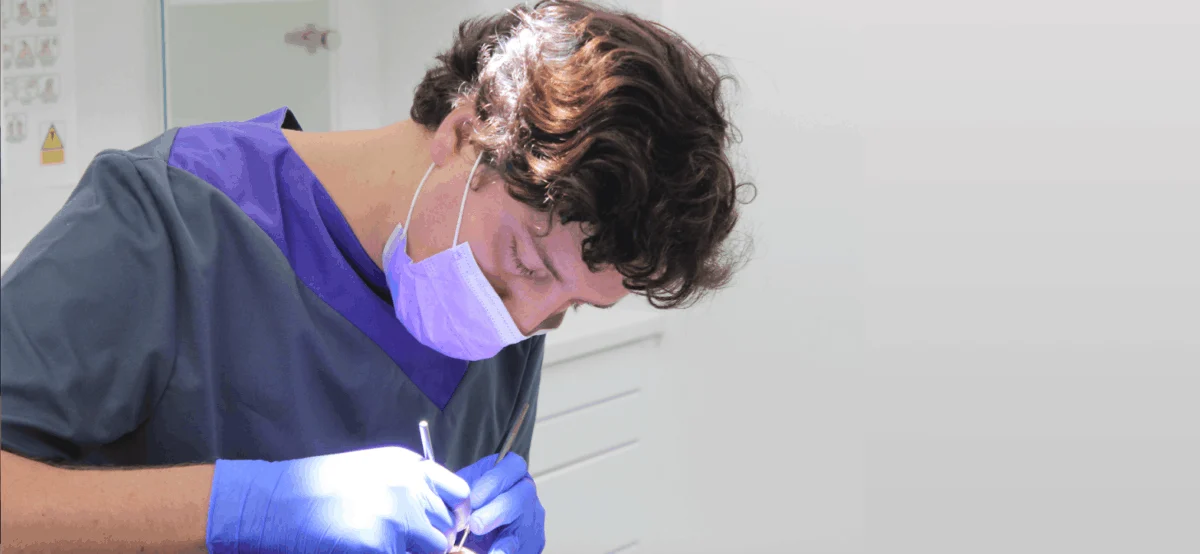
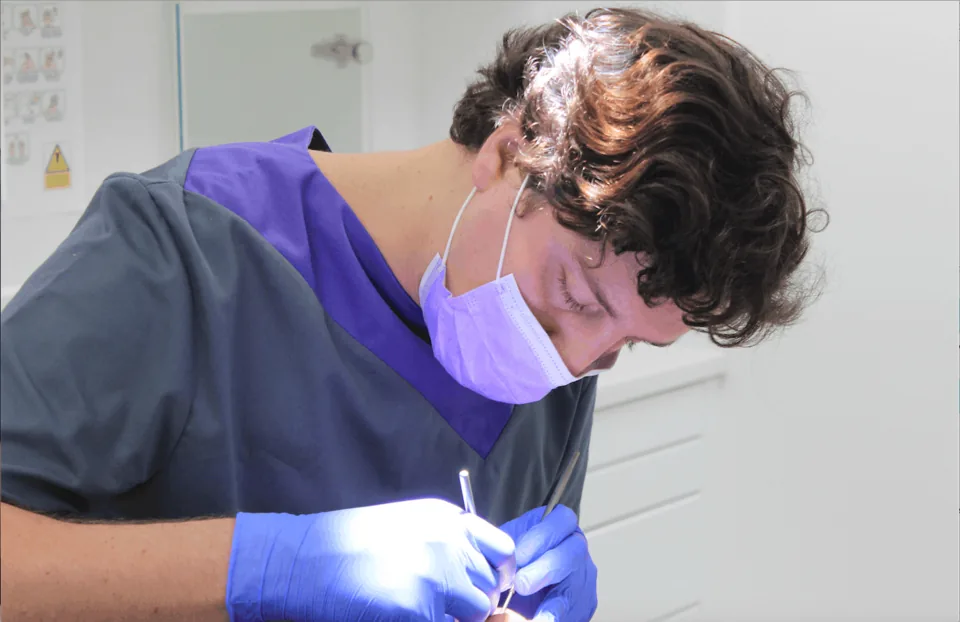
Dr Eduardo Banito providing orthodontic treatment at Smileworks
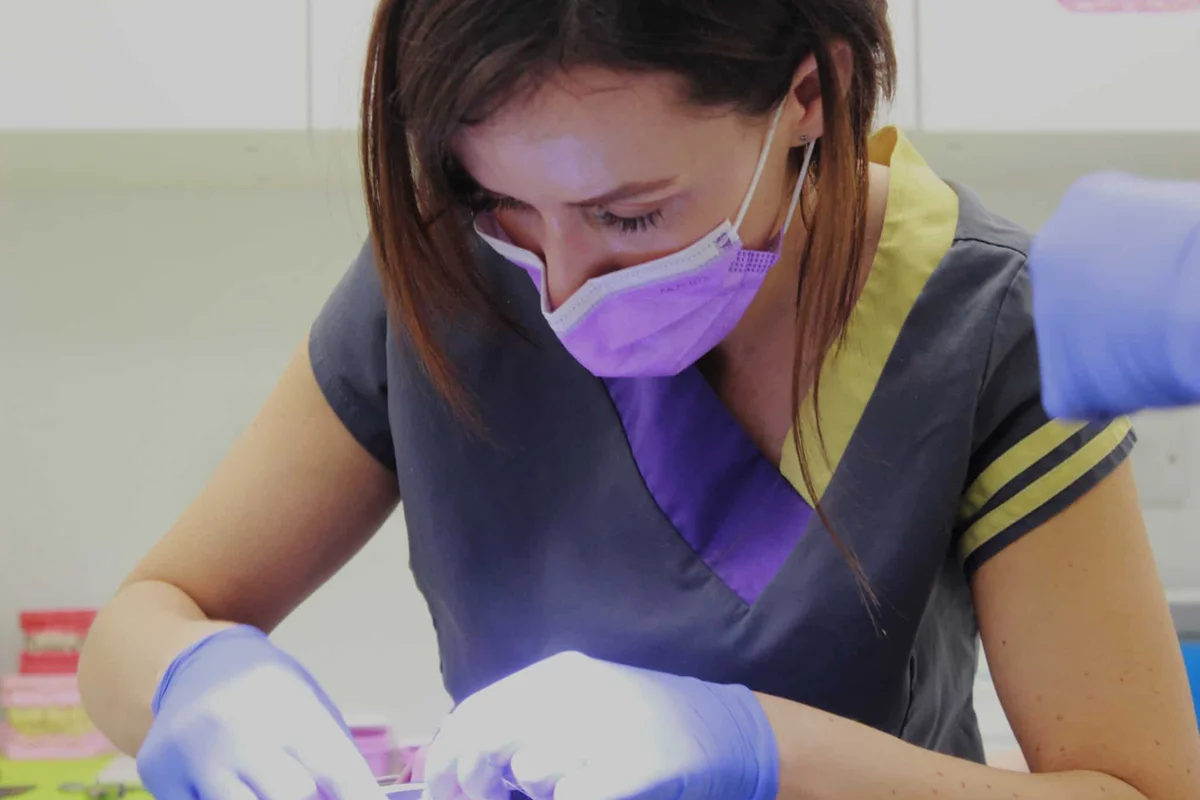
Smileworks clinician providing dental care

Research shows that fixed appliances (whether placed on the front or the inside surfaces of the teeth) tend to achieve more predictable outcomes than removable aligners.

Lingual braces are not new. They’ve been used for decades and modern systems such as Incognito have refined the technique through precision engineering. Incognito brackets are crafted from a gold alloy and individually manufactured for each patient, improving both comfort and accuracy.

Because lingual braces sit on the inner surfaces of the teeth, they can feel quite different from traditional braces. Some patients adapt quickly, while others find them difficult to tolerate, which is why careful case selection matters. Studies also show that speech adaptation and tongue comfort can vary, particularly in the early stages of treatment.

From a clinical perspective, the decision goes beyond invisibility or precision. Dentists consider whether the level of control is truly needed, how well a patient is likely to adapt, and whether the added complexity and significantly increased cost are justified.

Adult lingual braces brands are Incognito™, WIN, and Forestadent® 2D. But a good braces dentist can make hidden braces out or regular brackets and wires and bond them to the backs of the teeth. Dr Eduardo says: “There’s no need for branded products in practice although patients often have their hearts set on a particular brand.”

When we recommend lingual

When a patient wants lingual braces, dentists are immediately considering and evaluating certain mechanical, lifestyle, cost and compliance trade-offs. 

Brackets and wires on inner tooth surfaces make certain movements harder.  

Dr Eduardo says: “The wire is not an arch shape it’s a mushroom shape.  This makes certain movements like arch expansion more difficult and take longer.”

The tongue naturally rests against the inner surfaces of the braces and many patients get irritations and injuries to the tongue. All this means more visits and when you think these braces are twice the price of other systems, it sometimes seems an inelegant solution. 

The decision always comes down to whether the benefits justify the trade-offs for that individual case.

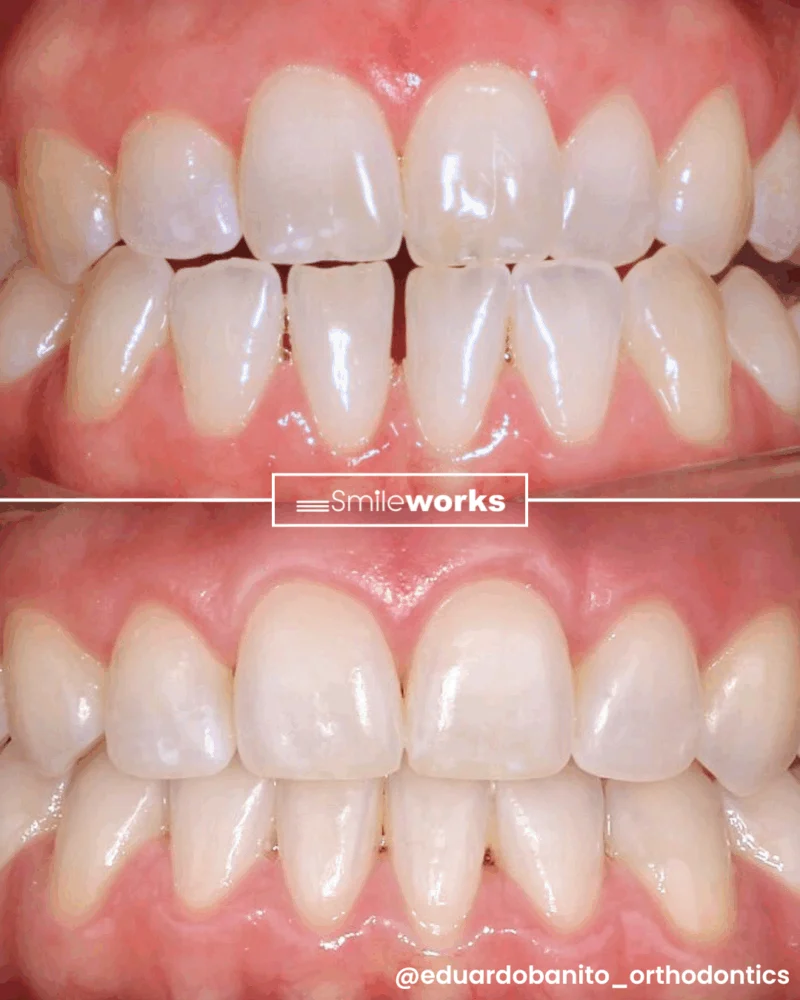
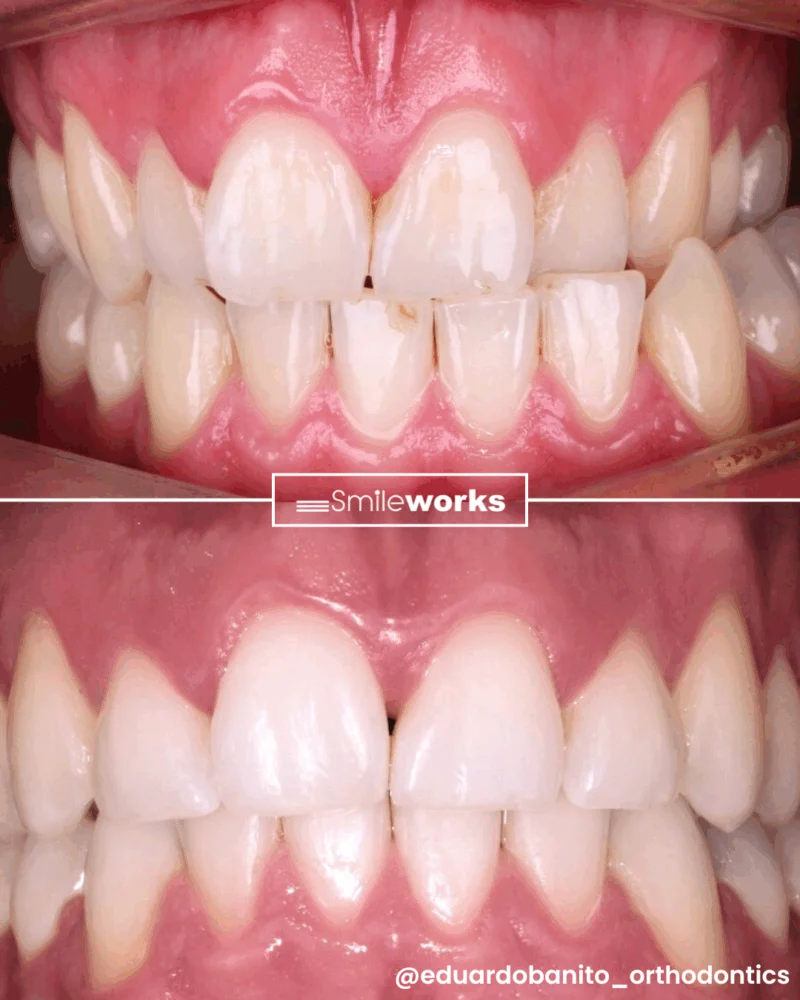
lingual braces before and after
lingual braces results

CASE STUDY:

We often treat patients whose public profile makes discretion an absolute priority. In one recent case, a high-profile social media figure chose lingual braces to keep treatment invisible. Once treatment began, there were some mechanical limitations, comfort challenges and lots of visits. 

In hindsight, some patients say they might have preferred aligners or conventional fixed braces once they fully understood the trade-offs. Eduardo has reflected on cases like these and occasionally found himself thinking, “was this really the best choice for them?”

This is exactly why dentists sometimes guide patients toward different options. The goal is always long-term comfort, predictability, and satisfaction. Not always going with the most discreet solution. It is very difficult to explain and foresee the challenges with lingual systems and dentists are always using their vast experience to evaluate what’s best in the circumstances for this patient. 

Lingual vs Other Orthodontic Options

Lingual prices braces (Liverpool vs London):

Types of Lingual BracesLondon Typical RangeNorth UK Typical RangeWhat Affects Price
Branded bespoke lingual (Incognito, WIN, fully customised)£8,000 to £11,000+£7,000 to £10,000+Case complexity, specialist experience, treatment length
Non branded lingual (standard internal brackets)£2,500 to £7,000£2,000 to £6,500One or two arches, alignment difficulty, finishing detail

Lingual braces pros, cons, and trade-offs:

SystemVisibilityBest ForComfortControlTypical Visits
Lingual BracesCompletely hiddenPatients wanting invisible treatment with precise controlAdaptation period for tongueExcellent for complex casesEvery 6 to 10 weeks
Clear AlignersNearly invisibleMild to moderate alignmentUsually comfortableLess precise for some movementsFewer visits in many cases
Fixed BracesVisibleBroad suitabilityInitial sorenessVery predictableEvery 6 to 10 weeks

Your Consultation

It starts with you.

Before discussing appliances, mechanics or treatment timelines, Eduardo wants to understand what has brought you in. What is on your mind? What is bothering you? Why now? Whether your priority is confidence, comfort, aesthetics, or a combination of all three.

Your story shapes the recommendation. Orthodontics is not about choosing a product. It is about understanding what outcome would genuinely improve your daily life.

Eduardo has a rare ability to make complicated things feel simple. Lingual braces, aligners, and fixed appliances all come with different mechanics, pros and cons. Patients often say that after a few minutes of conversation everything suddenly feels obvious.

There is no jargon and no pressure. Eduardo’s role is to guide you and he cares very deeply about his patients. Your happiness is a point of professional pride. He places himself at the centre of the decision-making process as if the outcome were his own. Patients often describe this as an “I’ve got you” feeling. A sense that their comfort, confidence, and long-term satisfaction really matter.

By the end of the consultation, you will understand whether lingual braces are genuinely suitable and why, what alternatives may work better, precisely how treatment will look feel, how long it will take, the itemised cost (set out in your treatment plan) and what kind of result you can look forward to.

Dr Eduardo Banito, Head of Orthodontics at Smileworks

Meet Eduardo

Dr Eduardo Banito BDS PGA MClinDent (Orthodontics)

BDS PGA MClinDent (Orthodontics)
GDC: 224468

Head of Orthodontics at Smileworks

Eduardo is Head of Orthodontics at Smileworks and has completed more than 1,800 orthodontic cases. He holds an MClinDent in Orthodontics and Dentofacial Orthopaedics and treats adults and children with fixed braces, clear aligners and complex orthodontic needs.

His approach starts with careful clinical judgement: choosing the right treatment, explaining it clearly and staying personally involved throughout. He pays close attention to the finishing and retention, with support tailored to each patient.

read more

It's time to stop guessing.

If you’ve read this far, you’ve probably realised choosing lingual braces is not about picking the most discreet option. It’s about understanding what will work for your teeth, your bite, and your lifestyle.

This is where Eduardo’s experience makes all the difference.

Patients often say its a relief to finally know. No more comparing systems, no more second guessing, no more worrying about making the wrong choice. Just a clear, professional recommendation based on science. 

A consultation with Eduardo is not a commitment to treatment, it’s an opportunity to stop guessing and get clarity. Even if you decide not to start right away, you’ll leave with a personalised treatment plan that explains exactly what’s happening, what your options are and what outcomes you can expect.

Some patients choose to take that plan away and continue their research feeling better informed. Many find that once they have clear answers the need to keep searching disappears.

If you’re ready for that clarity then the next step is simple. Book a consultation with Eduardo and let us help you make a decision you feel confident about.

You do not have to figure this out alone. We are here to guide you.

Understanding the cost of lingual braces

Lingual braces are expensive. Incognito have eye-waveringly high lab coders because the brackets are fully customised, precision engineered and made from gold alloy. They involve more clinical time and more planning and sometimes take longer. 

LINGUAL BRACES  |  £9000

However cost alone is never the deciding factor. The real question is whether lingual braces offer a meaningful advantage in your specific case compared to other systems.

This is why price is always discussed alongside suitability. The goal is not to choose the most expensive option but the one that delivers the best long-term outcome for you.

Orthodontic treatment lasts months. The result lasts decades. That is the timescale we use when discussing value. Patients typically pay with our specific lingual braces payment plans at Smileworks.

FAQs

Are lingual braces the best option for the most discreet treatment?
Not always. Discretion is important but comfort, movement predictability and long term stability influence the final recommendation more than aesthetics alone.
Does newer technology mean better results?
Not necessarily. Predictable biomechanics matter more than branding or innovation. The best outcomes come from choosing the right tool for the case not the newest system.
Does paying more mean a better result?
Higher cost reflects customisation and laboratory work not guaranteed superiority. The goal is always the most stable and comfortable outcome, not the most expensive appliance.
Does this mean lingual braces are rarely used?
Not at all. They are highly effective in the right situations. Careful case selection simply ensures the benefits outweigh the compromises.
Will I be told what to do, or will I have a choice?
You will always have a choice. Eduardo’s role is to explain what is clinically most predictable and comfortable for you, so you can make a decision with confidence rather than uncertainty.
Do lingual braces work for everyone?
No. Biological limits, movement requirements and adaptation vary from person to person. Lingual braces are highly effective in the right cases but not suitable for everyone.
Are speech and comfort issues usually minor?
For many people adaptation is manageable but not everyone finds it easy. Because lingual braces sit close to the tongue, speech and comfort take longer to adjust than with other systems and the tongue might get irritated.
Can I decide if lingual braces are right for me just from online research?
Online research can help you understand options but lingual braces are highly case dependent and only a clinical assessment can determine suitability for your specific teeth and bite.
Why can arch expansion be harder with lingual braces?
Because forces are applied from the inner surfaces of the teeth, the biomechanics behave differently. In some cases, alternative systems allow for more efficient expansion and long-term stability.

Here’s how to find us, or just google “lingual braces near me”. You can also call us to speak to someone: 0151 236 5166

Map

Interior tour