

Do you have an overbite or deep bite?
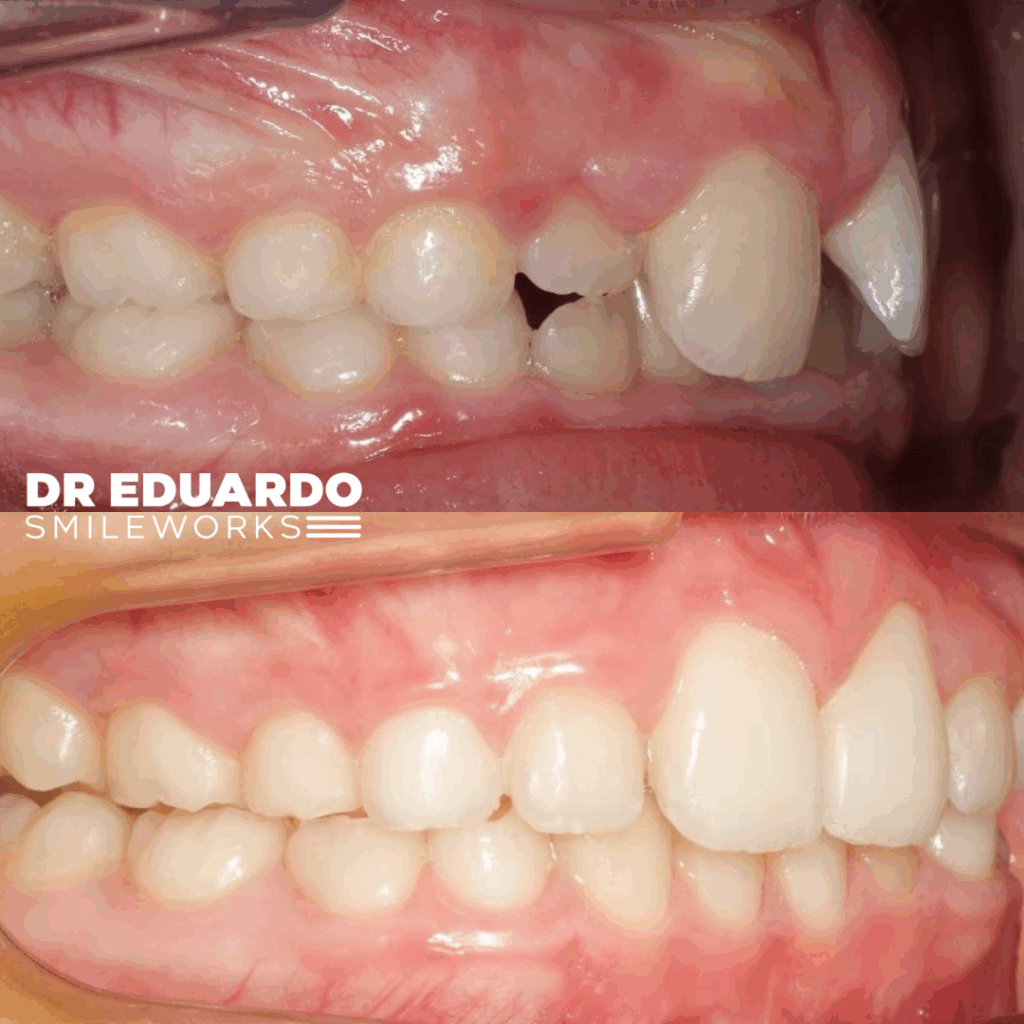
An overbite is where the top teeth overlap the lower teeth more than normal. Imagine the top teeth biting down too far so that you can’t see the lower teeth at all when you smile. This is very common in children before the adult bite fully matures. For some adults, the bite simply stays this way.
When you smile, you may notice that you can’t see any lower teeth or that your bite looks “closed”. A deep bite isn’t damage or disease – it’s a developmental pattern, and in many cases it can be corrected with braces.
Is a deep overbite normal?
Everyone has an overbite to some degree. It is measured by how far the upper teeth cover the lower teeth, and dentists generally consider 2–4mm to be an aesthetic and functional overbite. This is often what orthodontists aim for during treatment.
A mild overbite is completely healthy for many people, and often there are no problems even when it sits outside that 2–4mm range. Problems tend to occur when the overbite is excessive or pronounced, which is known as a deep bite.
You may hear terms such as “Class II bite” or “retrognathic bite” used by dentists or orthodontists. These are clinical descriptions of bite patterns where treatment is more commonly recommended, depending on wear, function, and appearance.
Dr Ana says, “An overbite is normal and everybody has one – especially children. But when the overbite is too big or too small, there can be problems.”
Deep bite problems
Deep bites can cause concerns for patients in both aesthetics (how it looks) and function (how it works). Aesthetic concerns are the most common – people often say their smile looks “closed” or that their bottom teeth don’t show when they smile.
In more severe cases, a deep bite can affect facial balance and make the lower face appear shorter or less proportionate. This is something we also consider when assessing patients for facial aesthetics.
Functionally, a deep bite can cause increased wear on the front teeth. Wear is complicated, expensive, and difficult to restore later in life. The lower teeth may also dig into the gums or palate over time, which can cause damage and discomfort.
Patients with a deep bite also have a higher risk of teeth chipping or cracking. Correcting an exaggerated or deficient overbite is therefore an important part of orthodontic treatment, and it is often one of the first things addressed during braces treatment.
Dr Eduardo says, “In more severe cases this can result in wear of the lower teeth against the upper, or trauma to the gums on the back of the upper central incisors.”
Overbite vs overjet – an important distinction
An overbite (or deep bite) is different from an overjet. Overbite refers to vertical overlap – how far the upper teeth cover the lower teeth. Overjet describes how far the upper teeth protrude forwards. A simple way to think about it is overjet is front-to-back, and overbite is up-and-down. Sometimes people use the terms interchangeably, but they are different problems and are assessed and treated differently.
What causes an overbite?
Overbites are largely inherited. Jaw growth and development during childhood plays a role, but genetics and how the teeth erupt are usually the main factors. Certain habits, such as thumb sucking in early childhood, can also contribute.
Dr Ana says, “Overbites are mostly inherited. This means that if mum or dad has a very deep overbite, their child is more likely to have that trait too.”
My child has an overbite – will this cause problems later in life?
In some cases, yes. This is one of the reasons so many children have orthodontic treatment, either on the NHS or privately. Bite problems do not usually correct themselves, and they can worsen over time. Wear can develop, bite forces can become uneven, and trauma to the teeth, gums, or palate can occur. This is why a braces assessment can be helpful if you have concerns.
Fixing a deep bite with braces
Braces are the most common treatment for a deep overbite. Orthodontic treatment uses wires, brackets, aligners, and controlled forces to move teeth gradually through the jaw.
Good orthodontics is not just about straightening teeth so they look nice – it’s about correcting the bite (occlusion) so the result is stable and long-lasting. Treating deep bites is routine for us in both children and adults.
Deep overbites are often best addressed while a child is still growing, but adult orthodontic treatment can also be very effective. Treating deep overbites in adults is something we do regularly at Smileworks.
Dr Ana says, “The overbite is one of the first things we correct in an orthodontic treatment plan. In many cases, braces alone can successfully correct a deep overbite by improving tooth position and bite relationships.”

Is surgery ever needed?
Surgery is uncommon and is only considered in severe cases where braces alone cannot correct the bite. Most deep overbites are managed successfully with orthodontic treatment. Not all overbites need treatment at all, and for many patients it is concerns about appearance or long-term tooth wear that prompt them to seek advice.
What happens at my braces assessment?
If you’d like to know more about the types of braces we offer, how assessments work, and what treatment might involve, you can take a look at our main Braces Liverpool page.
Overbite treatment before and after

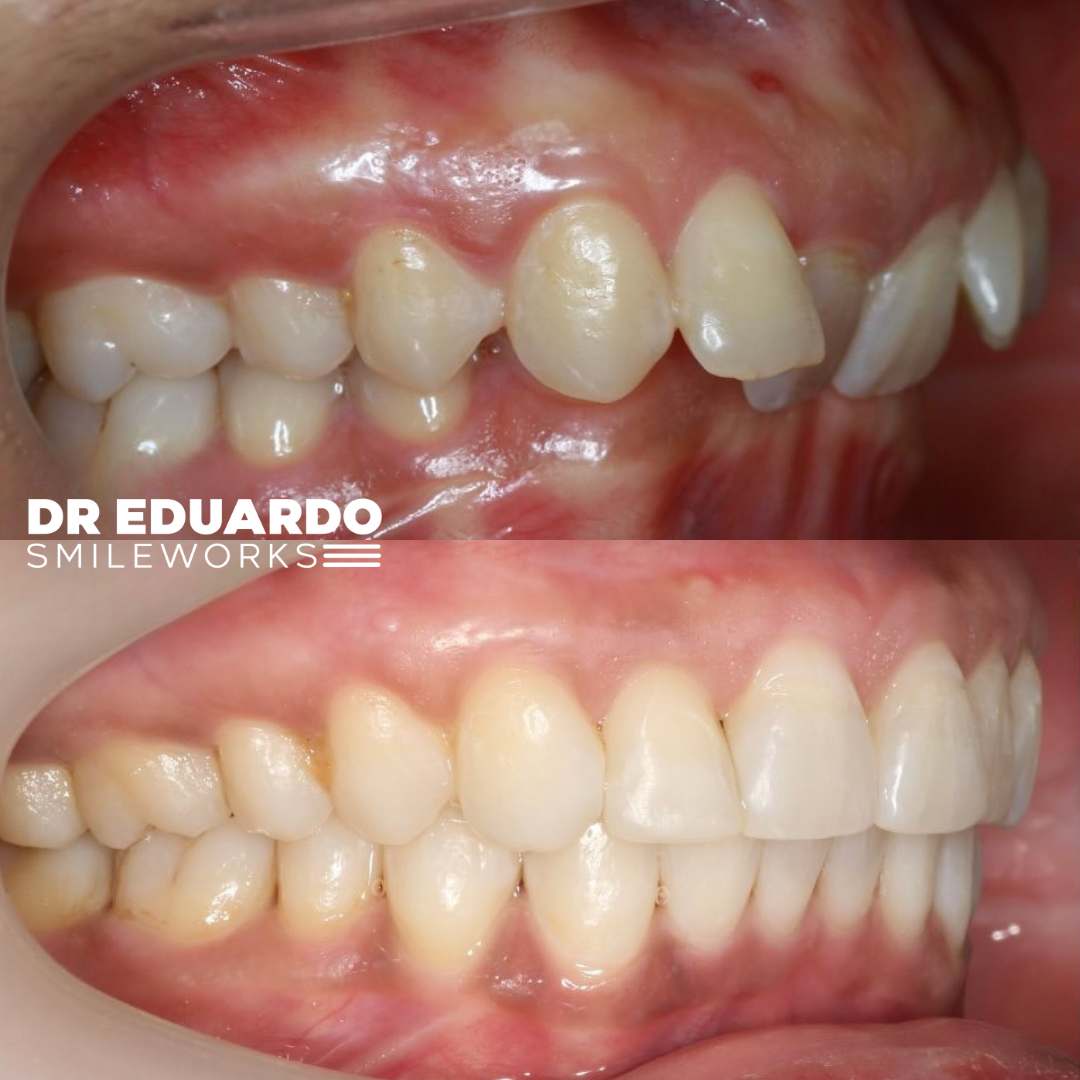
To learn more about deep overbite treatment or to arrange an orthodontic assessment, you’re welcome to call Smileworks on
0151 236 5166
or view our main braces page.